Do Water Filters Reduce TDS? And Should You Even Care About the Number?
A TDS meter is a pocket pen with 2 electrodes on the tip, and do water filters reduce TDS is the question that pen gets asked most. The reading it prints is total dissolved solids in parts per million, and it counts everything that went into solution, calcium and magnesium along with sodium, chloride and any nitrate that got in. Here is what the number measures, which media on this shelf move it, what chasing it costs, and why a lower figure isn't the same claim as cleaner water.
Do Water Filters Reduce TDS: What the Number Actually Counts
A TDS pen can't tell you what's dissolved in the glass, and it doesn't try. It runs a small current between 2 electrodes and reads how well the water carries it. Everything dissolved carries some of that current. The pen adds the whole lot into 1 figure and prints it as parts per million.
That's the entire reading, which is why the figure is a total rather than a finding, and 2 glasses with the same number can hold completely different water. Counted across the copy of every record in the index, 43 of the 136 boxes mention the number in some form. Forty of them print the letters TDS. Ninety three never print it at all.
The 22 boxes built to move the number split 2 ways. Eighteen are reverse osmosis, where a membrane holds back most of what's dissolved and flushes the rest down the drain, and those sit on the reverse osmosis shelf. The other 4 are 5 stage ion exchange pitchers, the small family the ZeroWater and Culligan records belong to. Only 2 media here do the job at all.
Everything else leaves the number where it found it, and 21 of these boxes say so out loud. The Aquasana cabinet that carries the widest certificate in the index tells buyers its system will not reduce total dissolved solids. A whole house unit in the catalog puts the same sentence in a bullet. The shelf is arguing with the meter.
- The count: 43 of 136 records mention the number, and 93 stay silent about it.
- The movers: 18 membranes and 4 ion exchange pitchers strip it, which leaves 114 records that don't.
- The disclaimers: 21 records print a line saying the figure won't budge.
- The claim: 7 records print a ppm figure, and the widest range of all belongs to a handheld meter, not a filter.
What that adds up to at your tap: a filter that changes taste and a filter that changes the reading are 2 different purchases, and 114 of these records only do the first 1. Read the box before you read the meter.
The way I see it
A TDS pen is a kitchen scale under a bowl of soup. It reads the total and never the contents, so 400 grams of broth and 400 grams of broth with a stone in it land on the same screen. The scale isn't lying. It just isn't answering the question you asked.
Water Filters Reduce TDS by This Much: The Pick, Scored 4 of 7
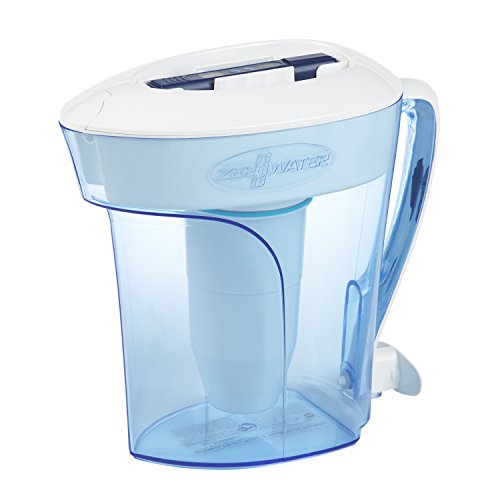
Every product in this index is rated 1 to 7 across seven verifiable criteria, 1 point per criterion and no partial credit. The pick is the ZeroWater 10 Cup pitcher, the only pitcher here that ships a meter in the box and asks you to trust its own number. The ZeroWater brand page runs the whole family on the same reading.
Four lines take a point and 3 sit at zero, and the zeros are mostly paper and pace. The points cover the certified scope, the rated life, the flow figure and the footprint. Here is what the listing leaves out: no listing number, no micron rating, and the shortest cartridge in the pitcher class.
| Criterion | Points | Evidence |
|---|---|---|
| Certified removal scope | 1 point | NSF/ANSI 42 and 53, with the contaminant list named in the certification |
| Certification transparency | 0 points | Standards, contaminants and capacity are stated, but no listing number and no micron rating are published |
| Filter life and capacity | 1 point | 15 gallons, certified, and it is the shortest rating in our pitcher records |
| Cost per gallon | 0 points | About 100 to 120 cents, the highest in our pitcher records, see the math below |
| Flow rate | 1 point | 6.5 ounces per minute, published, and about 12 minutes for a full tank |
| Install and footprint | 1 point | No plumbing, no tools, one counter or fridge shelf |
| Maintenance burden | 0 points | A cartridge every 15 gallons, the most frequent change in our pitcher records |
The card comes off the pitcher's own page, row for row, so the 2 pages can't disagree. It is the same 4/7 there. One figure is doing the heavy lifting here, and it's the 15 gallon capacity that sets the pace.
Water Filters Reduce TDS for the Buyers Who Care
The number matters to about 4 kinds of buyer, and none of them is shopping for taste. The first is the espresso and pour over person, because brew water follows a recipe and the reading is 1 of its ingredients. The second is the aquarium keeper and the grower, where the total is the whole job. A gauge built for those 2 buyers gets sold to everyone else anyway.
The third is the membrane owner, and the reading works as a maintenance gauge there. An RO unit drops the reading hard, so a rising figure on the outlet is the earliest sign a cartridge is spent. The RO against carbon comparison walks through why the 2 media read so differently. Only 1 of them is built to strip solids.
The fourth is the buyer who already owns a meter and a pitcher. That reader wants a target, and the honest answer is that the target belongs to the meter, not to the water. ZeroWater's own cartridge copy says to change the filter when the reading hits 006. That's a cartridge clock with a number on it, and the most useful thing the reading does here.
This Is Not Your Page If
- You want better tasting water: a carbon pitcher or a faucet mount fixes that for a fraction of the running cost, and 114 boxes here do exactly that job.
- You're treating the reading as a health report: it counts total solids, not specific ones, so a low figure says nothing about which contaminant is in the glass.
- You want a target to hit: the number is a gauge with no universal finish line, and 93 records in the index never mention it at all.
Put another way
A TDS reading is a headcount at a party. Forty people is 40 people whether they're friends, strangers, or 3 of them walked in by mistake. The door counts arrivals and never guests. You can't tell a good room from a bad one by the number on the clipboard.
Do Water Filters Reduce TDS: What You Get and Lose
The gain is a gauge you can read in 5 seconds with no lab and no paperwork. A pen and a glass tell you whether a cartridge is still doing its job, and on a 15 gallon part that's the difference between a working pitcher and a plastic tube. Only 22 records are built to give you that reading.
The cost is that the figure rewards the wrong instinct. A low number gets read as clean water and a high 1 as a problem, and neither follows. The minerals that raise the count are also the minerals a remineralizing stage is sold to put back, and 2 records on the RO shelf do exactly that. The number is a total, and a total can't be graded.
There's a third cost, and it's the one that shows up on the counter. Chasing the reading means buying a medium that strips everything, then paying for a cartridge that tires fast. The pitcher group runs from about 13 cents a gallon to over a dollar, and the cheapest gallon there has the least to say about solids. That is the trade in 1 line.
What You Get
- A quick gauge of whether a cartridge is still working, with no lab and no waiting.
- Twenty two records that shift the reading, including 18 membranes and 4 resin pitchers.
- A real target for the 2 jobs that need one: brew water and a growing tank.
What It Costs You
- A number that reads as a grade when it's only a sum, so 2 very different glasses can tie.
- A media choice that strips the useful minerals along with the rest, which 2 records then pay to add back.
- A running cost near a dollar a gallon on the pitcher that moves the figure hardest.
The certification roundup covers the standards that do name a specific contaminant, which is the part a total never does.
What Water Filters Reduce TDS Costs in Cartridges
Moving the number is the expensive half of this shelf. A carbon pitcher runs a 120 gallon cartridge at about 13 to 17 cents a gallon. The 5 stage pitcher that moves the figure hardest rates 15 gallons and runs about 100 to 120 cents.
The same glass of water costs roughly 7 times more. That gap is the price of the reading.
The pace is the second bill, and it's the one buyers miss. A 15 gallon cartridge and a household drinking half a gallon a day means a fresh part every month. At a gallon a day it's every 2 weeks and about 24 cartridges a year. A bigger tank or a longer rating doesn't slow that clock down.
- Under $20: the handheld meter itself, rated 0 to 9990 ppm with 1 ppm resolution, which is the cheapest way to read the figure.
- Under $35: the entry carbon pitchers and faucet fixtures, and 114 records leave the number where they found it.
- Around $240: the first membrane system, where the reading finally moves and the waste line arrives with it.
- Over $1,000: the largest units on the whole house shelf, which still don't touch the figure.
None of those bands buys you a better number for its own sake. They buy a medium, and the medium decides the reading. The half of the story the tag drops is the cartridge count behind the upfront price.
The short version
Reading a TDS meter is like checking the data use on your phone. The glance is free and it changes nothing. The bill only arrives when you act on it, and the way to act is a cartridge replacement, which on a 15 gallon part is a subscription you'll feel. A free number with an expensive answer isn't free.
Do Water Filters Reduce TDS: Which Media Do It
Five media show up across this index, and only 2 of them touch the reading. A membrane and a resin strip dissolved solids. Carbon grabs chemicals that are already in the water without removing the dissolved part, and a particle screen and a UV lamp work on sizes and on living things. Only the first 2 leave a lower number behind them.
| Medium | What it does to the number | Records here | What it means for you |
|---|---|---|---|
| Reverse osmosis membrane | Strips most dissolved solids and sends them to the drain | 18 | The only class that reliably drops the figure near zero |
| Ion exchange resin | Swaps dissolved ions onto a bead and holds them | 4 | The pitcher route to a low reading, on the fastest cartridge here |
| Carbon block | Adsorbs chlorine and organics, and leaves the dissolved part alone | the bulk of the 114 | Fixes taste and odor, and the reading will not move |
| Sediment and hollow fiber | Screens particles by size, and dissolved solids pass straight through | part of the 114 | Clears cloudiness and protects the cartridge behind it |
| UV lamp | Does nothing to dissolved solids at all | 5 | A kill step, and the reading is unchanged on both sides |
The table is why the question has no single answer. Where a box sits depends on the medium inside it, and the medium is 1 line on the listing that most shoppers skip. The certification page covers the standards that name specific contaminants rather than totals.
Do Water Filters Reduce TDS: Your Questions
- Do water filters reduce TDS
- Only 2 kinds do, and both are a membrane or a resin. Across this index, 18 reverse osmosis systems plus 4 ion exchange pitchers are built to strip dissolved solids, and the other 114 records leave the reading alone. Carbon, sediment and UV all do real work without touching the number.
- Does a carbon filter reduce TDS
- No, and the boxes say so themselves. A carbon block adsorbs chlorine, taste and odor compounds, and lots of organics, while dissolved minerals pass straight through it. Twenty one records here print a line admitting the figure will not budge, and most of them are carbon.
- Is a lower TDS number always better water
- No. The figure is a total, so it counts calcium and magnesium alongside sodium and chloride, and it can't tell you which is in the glass. A low reading removes the minerals a remineralizing stage is sold to add back, and 2 records on the RO shelf carry that stage for a reason.
- Why does a meter read higher right after a filter change
- Because a fresh cartridge needs a flush before the reading settles, and the first cup after a change carries what the media released. Run a tank through it and read again. ZeroWater's own copy ties the cartridge clock to the reading, and it says to change the filter when the meter hits 006.
- What does a TDS meter actually measure
- It reads how well water carries a small current, and calls the result total dissolved solids in parts per million. The pen on this shelf is rated 0 to 9990 ppm with 1 ppm resolution, and its accuracy is about 2 percent. That's a conductivity reading with a naming convention, not a lab panel.
Water Filters Reduce TDS Only Where a Medium Moves It
Do water filters reduce TDS is a question with a 22 record answer and a 114 record shrug. Only the membrane and the resin bed move the figure, and everything else on this shelf changes taste, clears cloudiness or kills living things without touching it. The box knows. That's why 21 of them print an admission.
The pick is the ZeroWater 10 Cup pitcher, the record here that hands you the meter with the cartridge.
It names standards 42 and 53, rates 15 gallons, and asks you to read the number yourself. The RO group is where the reading drops furthest, and the alkaline shelf is where a stage puts minerals back in. Only 1 of those is the cheaper gallon.
One hundred and fourteen records that leave the figure alone, against 22 that move it, is a market where the number gets sold harder than it gets earned. The bacteria and virus page makes that argument at the other end of the shelf. Different claim, same rule.
The reading is a sum, not a verdict.
Read the Media, Not the Meter
The membrane and the resin move the number, and almost nothing else on this shelf does. One hundred and fourteen records leave it exactly where they found it. Check which medium is inside before you check the reading.
Every Term Behind TDS in Water Filters
- Total dissolved solids: everything in the water that dissolved and stayed dissolved.
- Parts per million: milligrams per liter, the unit the pen prints.
- Conductivity: how well the water carries a current, the raw measurement behind the number.
- Membrane: a fine sheet that holds dissolved solids back and sends them away.
- Ion exchange resin: a bead bed that swaps dissolved ions out and holds them.
- Deionization: the resin route taken all the way to near zero.
- Adsorption: the trick carbon plays, where chemicals cling to the surface without leaving solution.
- Remineralization: a stage that adds calcium and magnesium back after a membrane strips them.
- TDS creep: the rise in the reading after a system sits idle before the first pour.
- Concentrate: the stream of dissolved solids a membrane sends away rather than keeping.
- The Nerd Stamp™: the 1 to 7 rating every record here carries, 1 point per criterion and no partial credit.