LifeStraw Water Filters Review: The Straw That Started the Category
How long a LifeStraw keeps working comes down to one figure, and in this LifeStraw water filters review only half of the 4 models print it. Both straws rate their membrane at 1,000 gallons. The squeeze bottle and the gravity bag name no figure at all. The 2 that ask the most money are the 2 that say the least.
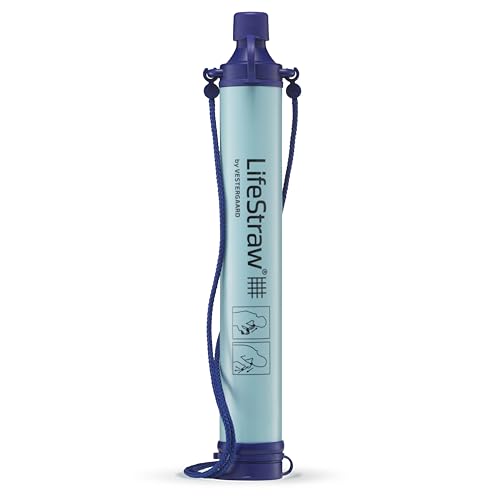
LifeStraw Water Filters Review: What These 4 Models Print
Four models sit in this line and they cover 3 kinds of carry. Two are straws, one is a collapsible squeeze bottle and one is a gravity bag holding 3 liters. Every one of them runs on the same hollow fiber, and every one prints the same 2 removal figures on the box. It's one filter sold in 3 shapes.
The paperwork is where the line thins out as the price climbs. None of the 4 fills the certification slot in its own listing, and there's no listing number a buyer could key in. One label, on the cheapest straw, names NSF P231 alongside the EPA, and one bullet behind it says the claims are checked against EPA, NSF and ASTM methods. Two models rate the life of the membrane, and 3 of the 4 hand you nothing you could look up.
- The spread: 2 straws, 1 squeeze bottle and 1 gravity bag, and the 2 straws are the cheapest models here.
- The standard: 1 label names a protocol while no model prints a listing number.
- The figure: 2 models name a 4,000 liter membrane, 2 stay silent, and only 1 fills the life field.
- The pore: no model prints a membrane rating, though the straws name what they catch down to 1 micron.
What that adds up to at the glass: all 4 models name 99.999999% of bacteria and 99.999% of parasites, and the straws add microplastics down to a micron. That's the same hollow fiber the field has trusted for a decade. The Sawyer line review covers the other membrane built for the same job. The water claim is the strong half of this line.
Think of it this way
Seven nines is easier to picture as a stadium. A million bacteria riding in a cup of creek water, and the membrane turns the whole crowd away before a single one gets through, which is what the percentage buys. The nines are the seller's own tally, and only one model backs them with a protocol name.
LifeStraw Water Filters Review: 5 of 7 for the Line
A brand page scores the line rather than one product, so this card belongs to LifeStraw itself. The same 7 questions get asked of every model, then answered once for the brand. Five land. Two don't, and both of them are about paper.
The membrane, the rate, the carry and the upkeep each take a point. One more goes to the removal breadth, which all 4 models state on the box. The 2 zeros are the certification slot and the life figure. Half the line won't tell you how long it lasts.
| Criterion | Points | Evidence |
|---|---|---|
| Certified removal scope | 1 point | The label on the Personal cites P231 and the EPA, so 1 model of the 4 carries a standard even though none fills the certification slot. |
| Certification and test transparency | 0 points | Not one of the 4 fills its certification field, and no listing number sits beside the P231 name for a buyer to key in. |
| Life figure across the line | 0 points | Half the line puts a number on the life of the membrane while the 2 dearest leave the slot empty, so the dearer half sells you a guess. |
| Cost per gallon | 1 point | A band under $20 across a rating of 4,000 liters works out near 2 cents a gallon, the cheapest rate here. |
| Removal breadth on the label | 1 point | Bacteria and parasites are named at seven nines and five nines, and the straws take microplastics to 1 micron. |
| Weight and carry | 1 point | The straw weighs 46 g, and the Peak units thread straight onto a standard bottle or a gravity line with no plumbing. |
| Maintenance burden | 1 point | A backwash accessory clears the Peak membrane, and nothing in the line runs on power, a pump or a clock. |
Both zeros live in the documents rather than in the water. The field stays empty across the line, and the P231 name arrives without a document behind it. Two models print the membrane's rating and 2 print nothing at all, so the card drops a point it could have kept. The straw works and the filing doesn't.
The straw that started this category is also the one carrying its paperwork, and it's the cheapest thing here. The 2 units above it, both Peak Series, print no life figure at all. Score the line by the water and it clears easily. Score it by the label and half of it is blank.
LifeStraw Water Filters: Who the Line Fits
This line fits 3 jobs, and the money follows the carry rather than the water. A walker wants the straw, a traveler wants the squeeze bottle and a small camp wants the gravity bag. All 3 run the same membrane, so the price step buys the body and nothing else. You're choosing a shape.
The straw is the default answer for a daypack. It weighs 46 g, drinks straight from a creek, and it asks for no squeeze and no bag. The Peak version adds a threaded base, so it screws onto a bottle neck or a gravity feed and moves 2.5 liters a minute. That's the whole trade on the cheapest models.
The camping and emergencies roundup runs this hardware against a disaster clock, and the gravity roundup goes deeper on the hang and drink bags. The gravity bag here holds 3 liters, so a camp of 4 fills once and passes it around, and there's nothing to pump. Small groups only.
This Is Not Your Line If
- You need a filed standard: only 1 label of the 4 names a protocol, so a shopper chasing a listing number leaves empty handed.
- You want a pump: nothing in this line pushes water by hand out of a silty source.
- You want the longest figure on the shelf: this line states 4,000 liters, and one rival membrane quotes 100,000 gallons.
- You want a cartridge band: no filter for this line appears in the index on its own, so the unit is the purchase.
The short version
The straw is a granola bar you can drink through. It weighs 46 g, rides in a jacket pocket for years, and it turns a creek into a water fountain while you keep walking. The lightest thing in the pack is what keeps you drinking.
LifeStraw Water Filters: The Trade-offs to Know
The strength here is the membrane and the numbers printed beside it. Every model puts bacteria removal at seven nines and parasites at five nines, and the straws add a micron figure for microplastics. Nothing here needs power, chemicals or a battery, which matters on a 5 day trip. Weight and reach are what you're buying.
The weak spot is everything after the water claim. A hollow fiber passes viruses, and no model in this line names virus removal at all. One label carries a protocol name, and the other 3 print a percentage with nothing behind it. On the claims that need a document, there's a percentage and a shrug.
What You Get
- Seven nines of bacteria removal on the label of every model.
- A membrane rated 4,000 liters on both straws.
- A 46 g straw, with no power, no chemical and nothing to charge.
What It Costs You
- A filled certification slot on none of them.
- A life figure on half the line and silence on the other half.
- Virus removal named nowhere, so a creek near a town stays a question.
The portable shelf scores these 4 models against the 19 others, and it's where the format split for the category gets drawn. That page counts 5 squeeze units and 5 gravity systems across the shelf. This line sits at the straw end of it.
For a longer rated membrane, the long life roundup sorts cartridges by the years they buy rather than the gallons they hold. Different question, different shelf.
What LifeStraw Water Filters Cost to Run
Nothing in this line sells as a cartridge you reorder, so the purchase is the whole cost. A straw, a squeeze bottle and a gravity bag each hold their own membrane, and no separate LifeStraw filter sits in the index with a band of its own. Three bodies, 3 membranes and no reorder.
The cheapest model runs at about 2 cents a gallon. Spread the under $20 band across the 4,000 liters it's rated for, and the math lands close to 2 cents. A bottle at a trailhead costs more than a hundred times that figure. That's the trade the line makes.
- The straw: an under $20 band across the rating on the Personal, the cheapest model on the shelf.
- The squeeze bottle: $35 to $40 for 650 ml of bottle around the same membrane.
- The gravity bag: around $60 for 3 liters a pour, the most water per trip here.
- The reorder: nothing to buy again, and no band quoted for a cartridge that doesn't exist.
The under sink shelf is where a household buys a cartridge every 6 months instead, so the money there repeats and the money here doesn't. A straw at a trailhead and a filter under a kitchen sink aren't the same purchase at all. One runs on a band, the other runs on a habit.
The collapsible bottle: 650 ml of water and the same membrane, squeezed by hand.
LifeStraw Water Filters Review: The Line Side by Side
Each row below is one of these 4, with the carry it offers, the figure it files and the band it asks. The last column counts what each one will tell you before you buy. One row fills most of it.
| Model | Carry | Life figure | Standard named | Upfront band | What it files |
|---|---|---|---|---|---|
| Personal straw (B006QF3TW4) | Hollow fiber straw | 1,000 gal filed | P231 and the EPA | under $20 | 2 of the 4 marks. |
| Peak straw (B09SBPWHS7) | Threaded base, bottle or hose | 1,000 gal, copy only | no standard named | $20 to $30 | 1 mark. |
| Peak squeeze bottle (B09SBP8LY9) | Collapsible bottle, 650 ml | no figure | none filed | $35 to $40 | a blank model. |
| Peak gravity bag (B09SBP549H) | Gravity bag, 3 liters | no figure | nothing named | around $60 | a blank model. |
The line covers 3 carry styles and 2 of them are straws. Between them these 4 models reach both ends of the category: a straw you drink through on a break, and a bag that filters 3 liters while you set up a tent. Everything in between is a shape decision.
Set against the field, the weakness is the number on the label. The Sawyer membrane quotes 100,000 gallons, the Katadyn bags quote 1,000 liters, and the LifeStraw straws quote 4,000 liters. Only 1 model here carries a protocol name, and it's a shelf where the paperwork is thin everywhere. Competitive on water, quiet on paper.
The full water filter index sorts these models against the rest of the shelf, and the inline roundup covers the cartridge that hides inside a fridge. Same question, different plumbing.
Put another way
Four thousand liters is a bottle refilled twice a day for 5 years. Picture the pile of one liter bottles it replaces, and none of it rides in the pack. That's the trade: no bottles on your back, no document on the label.
LifeStraw Water Filters FAQ
- Do LifeStraw filters remove bacteria
- Every model prints seven nines on bacteria, which covers E. coli and salmonella, and five nines on parasites. That's the claim on the box, with no listing number behind it.
- Which LifeStraw lasts the longest
- The 2 straws carry the only membrane rating here, at 4,000 liters, and the Peak squeeze bottle and gravity bag state nothing. The cheapest models carry the only life figures in the line.
- Are LifeStraw filters NSF certified
- One label names P231 with the EPA, and it sits on the cheapest straw. The certification field is blank on every record here. A protocol name isn't a listing number.
- What does a LifeStraw cost to run
- Nothing in the line is a reusable cartridge, so there's no reorder band to quote. The cheapest model asks under $20 for its own rated life, which puts the running cost inside 3 cents a gallon. Buy once, then drink.
- How much does a LifeStraw weigh
- The Personal straw weighs 46 g, or just under 2 ounces. The Peak units are heavier because they carry a bottle or a bag with the membrane inside. Weight follows the body, not the filter.
LifeStraw Water Filters Review: Where the Line Lands
The pick of the line is the Personal straw: a 46 g hollow fiber good for 1,000 gallons, for under $20, with the only protocol name on any label here. It started this category and it's still the cheapest model at the top of it.
The Peak straw is the version for anyone who carries a bottle, since its threaded base screws onto a bottle or a gravity line. The 3 liter bag suits a small camp that hangs its water. Three models, 3 jobs, one membrane.
Four models, 3 carry styles, 2 with a stated rating and 1 with a standard on its label.
Read the Label, Not the Legend
This line built the category, and it still prints the same 2 percentages on every box it sells. Match the carry to the trip, then check the label for a life rating and a protocol name. Four models, 2 of them willing to say how long the membrane lasts, and 1 that names a standard.
LifeStraw Water Filters Terms and Standards
- NSF P231
- The protocol for microbiological water purifiers, and it covers bacteria, viruses and protozoa. One label in this line names it, and no listing number follows the name.
- Certification field
- The slot in a product record where a maker files its standards. It sits empty on every record here, which is why the label art carries the only standard on the page.
- Hollow fiber
- A bundle of tubes with pores far under a micron. Water passes through the wall and bacteria and protozoa stay behind, and it is the membrane inside all 4 of these models.
- Micron
- A thousandth of a millimeter. The straws put a number on microplastics, a micron and no further, which is a catching figure rather than the pore size of the membrane.
- Backwash accessory
- A fitting that pushes clean water backwards through the Peak membrane to clear silt. It restores flow, and it is why the life figure is counted in gallons rather than in days.
- Threaded base
- The screw fitting on the bottom of the Peak straw, which takes a bottle neck or a hose from a gravity bag. It is the reason one straw serves 3 carry styles.
Keep Reading: More LifeStraw Water Filters
- Best Portable Water Filters: the shelf these 4 models are scored against.
- Best Camping Water Filters: the class built for raw water and no tap.
- Best Gravity Water Filters: where the 3 liter bag also appears.
- The Sawyer Line Review: the other membrane built for the same job.